

Recently, I read a quote from Michael Brits, the general manager at Tractor Outdoor. He said, “Out-of-home (OOH) media is a powerful tool for conveying your brand message”. He further said that, similar to how you would pick a creative agency to design a successful campaign, you have a variety of experienced media owners or partners who can help you design and choose the right creatives to make your campaigns compliant. The keyword we need to focus on is ‘compliant’. In this article, we are going to understand why creative compliance is no longer a checkbox when it comes to OOH media campaigns.

Key Takeaways
|
What is Creative Compliance in OOH Media?
Compliance, in the OOH context, involves adherence to the local municipalities' by-laws. This can differ from region to region. These by-laws are largely there to regulate the industry and govern outdoor advertising on municipal and private property. They also ensure the health and safety of the broader community and the environment. In other words, they're there for the good of all stakeholders.
Here is an example of a compliant creative
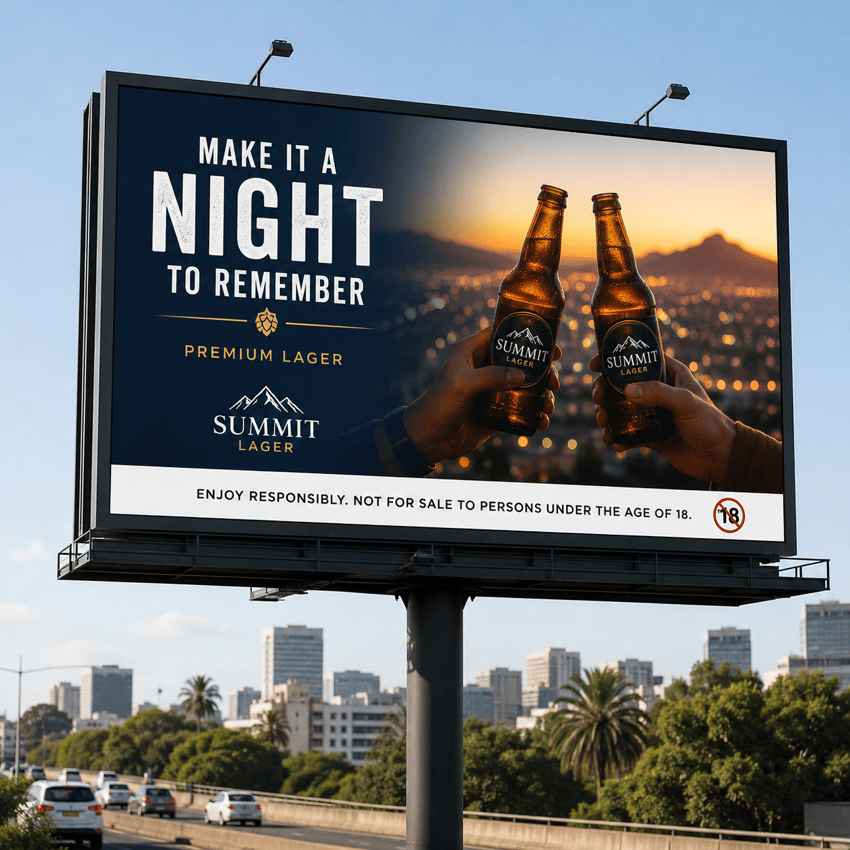
Why this creative could be considered compliant:
- The creative avoids suggesting that drinking leads to social or financial success.
- It does not encourage excessive or irresponsible consumption.
- It includes a responsible-drinking message.
- The design doesn't use imagery or messaging that targets children.
- The billboard itself would also need to comply with the specific municipal signage requirements for its location.
- The advertiser would need to ensure the placement and surrounding environment meet any applicable alcohol-advertising requirements.
Importantly, creative compliance and site compliance are two different things. A perfectly compliant creative can still be placed on an illegal or non-compliant billboard structure.
Also Read: Why Every Enterprise Advertising Team Needs a MediaOps Playbook
Why Creative Compliance isn’t a Checkbox Anymore?
The answer is simpler than you think. The OOH space is no longer the simple advertising ecosystem it used to be. As an advertiser, you not only have to worry about what appears on the billboard. You have to pay attention where and how that message is displayed. Non-compliance can lead to an oversaturated OOH market. More billboards/signage will mushroom in the market than the regulations actually allow. This can make it incredibly difficult for advertisers to decide the right sites and right media owners or partners.
Your campaign may have a compliant creative. But if it appears on an unauthorised site, the campaign will still create regulatory and reputational challenges.
This is applicable to countries like the UK, where OOH regulation can vary between municipalities. Local authorities operate under different by-laws and signage requirements. At the same time, resource constraints can make it difficult to prevent illegal sites from being erected or enforce their removal.
Several local municipalities are currently reviewing their by-laws and signage regulations, with broader efforts also underway to modernise the regulatory framework. Yes, these changes are necessary and overdue. But they also mean that you need to stay informed as requirements change.
In essence, it puts greater responsibility on both sides of the OOH ecosystem. If you are an advertiser, you need to look beyond the creative execution itself and consider the regulatory requirements surrounding the campaign. If you are a media owner, you need to provide greater transparency around your sites and help clients navigate the relevant requirements.
Creative compliance is not the simple exercise of approving an artwork before it goes live. It is about ensuring that the message, placement and execution work together within the regulatory framework.
Also Read: Best Media Operations Companies for OOH and DOOH in 2026
How Successful OOH Teams Build Compliance Into Every Campaign?
Successful OOH teams don’t treat compliance as a final sign-off before a campaign goes live. They build it into the process from the start. Here are the different steps they follow to build compliance into every campaign:
1. Make education part of the process
It all starts with understanding the rules. Build a strong relationship with your media owners or OOH partners. Get comfortable asking questions about regulations and potential risks. If you are a media owner, help your clients understand the OOH by-laws that apply to their campaigns. Requirements can vary significantly between regions. So keep them informed. This will help both sides make better decisions from the outset.
2. Know the inventory you are buying
You should carry out your own checks before committing to an OOH site. Site images should be recent and representative of what an advertiser can actually expect to see. Check that the site still exists. Ensure it has not been blocked by new developments or structures. Most importantly, it should match the information provided on the rate card. Any changes to the surrounding environment could affect the visibility or compliance of a site.
3. Verify site compliance before going live
Always check the compliance before booking the campaign. Most media owners should be able to provide clarity on permits and any restrictions that apply to individual sites. This will automatically build greater confidence for you. After all, the chance of your campaign facing issues once it is live is slim now. You are also saved from investing in inventory that may later need to be removed or changed.
4. Match the creative to the environment
Creative - Compliant.
Message - No
Format - No
Placement - No
This is not an example of a compliant campaign. You need to work within the requirements of the location. Category also matters, especially if it is a regulated sector like alcohol. In such sectors, additional advertising requirements may apply. Successful OOH teams consider all these requirements during the creative and planning stages.
5. Build checks into every campaign
Site conditions and municipal requirements can change in the blink of an eye. Your campaigns need clear checks at key stages. Panning. Site selection. Installation. Execution. Don’t miss any stage. By making compliance part of your campaign workflow, you can catch issues earlier and make sure that your campaigns are always compliant.
Also Read: From Cost Centers to Profit Engines: Rethinking Ad Operations for Maximum Marketing ROI
How Can Brysa Help?
At Brysa, we combine our media operations expertise with creative services to help you turn your campaign ideas into execution-ready and compliant creative campaigns. Our creative specialists work closely with your media teams to understand the campaign objective, audience, placement and channel requirements. This way, we ensure that your creative is visually compelling and designed to work effectively across different media environments. Put simply, we can help you create campaigns that are scalable and aligned with the realities of media execution, while making it easier to take an idea from concept to campaign. Want to know more about us? Contact us now.